
Heritage & estates
Ivy and climbing plants on buildings: when to inspect and what to record
The key point
Do not assume that every climber is damaging a wall. Record what it conceals, obtain appropriate advice and inspect newly exposed details after any agreed clearance.
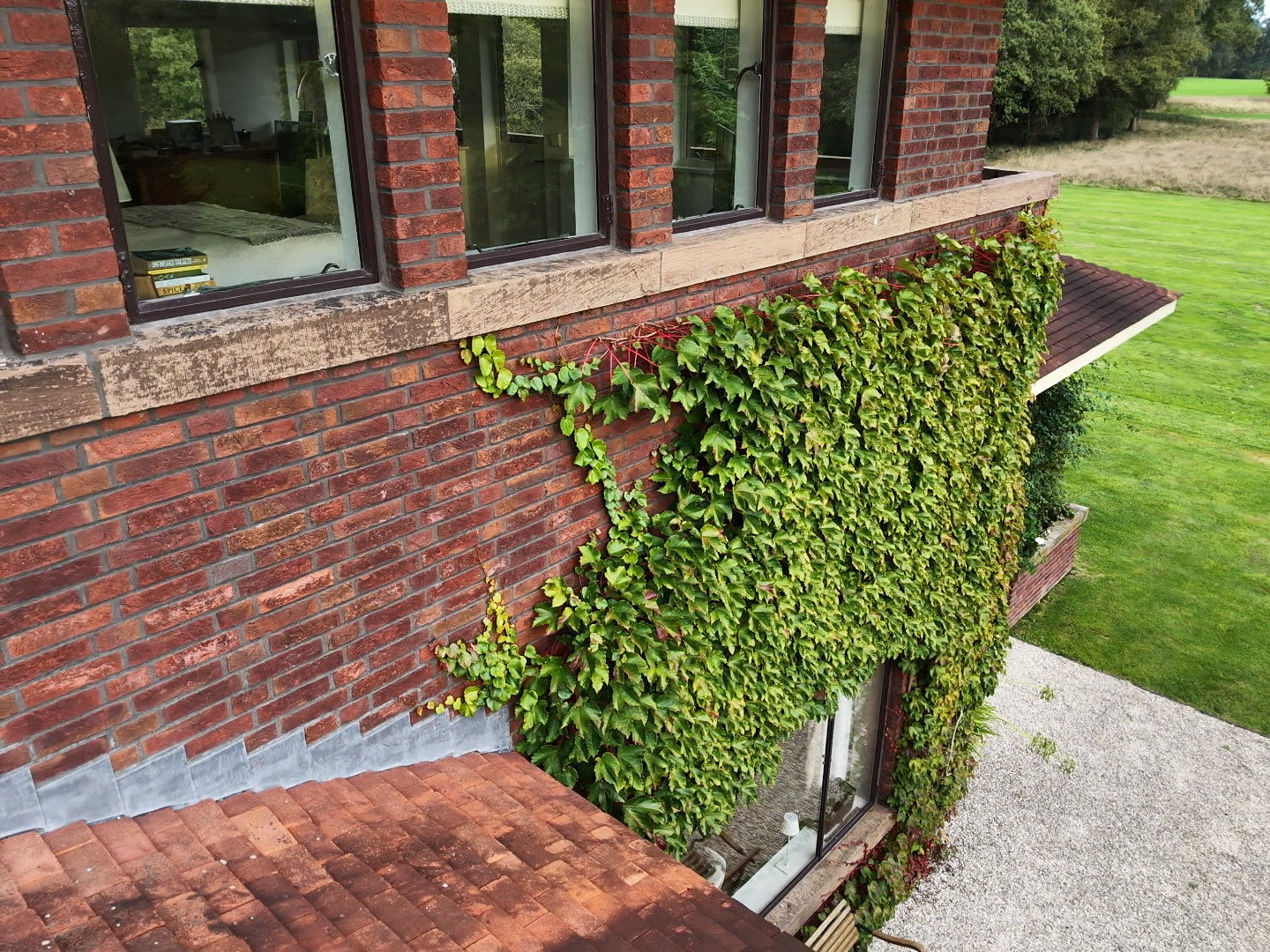
Climbing plants can be part of a property’s character, especially around an established country house. They can also make inspection harder by covering a sill, a wall junction or the route to a rainwater outlet. The first question is what can be seen and what remains hidden.
A useful exterior report should describe those limits without inventing damage behind the leaves. Where clearance is proposed, it should have a clear purpose and be followed by another look at the exposed detail.
Avoid a blanket diagnosis
Historic England’s ivy guidance explains that ivy can have benefits as well as risks, and that management depends on the condition of the wall and the way the plant is growing. It does not recommend treating all ivy-covered walls in the same way.
That is why an inspection should record the actual situation. Distinguish vegetation growing across a surface from a plant rooted within defective masonry, and avoid identifying the species with certainty when the available images do not support it.
Reference: Historic England: ivy on walls
Record the details that affect maintenance
Photograph the whole area, then identify the parts that cannot be inspected. Pay attention to the relationship between growth and windows, sills, roof junctions and rainwater fittings. The useful output is a map of visibility and access, not just an attractive photograph of the facade.
In Focal’s country estate example, the report records climbers concealing sections of wall and junctions. It recommends selective pruning followed by inspection. The condition of the concealed fabric was not established from the original images.
- Which component or joint is hidden?
- Is a window, vent or drainage route obscured?
- Can the area be reached safely for an appropriate check?
- What will need to be photographed again after clearance?
Define the purpose of any clearance
An instruction such as “remove the ivy” is too broad when the aim is simply to expose a junction for assessment. Agree the area to be opened up, the person responsible and the follow-up inspection before work begins. This helps preserve useful planting while making the relevant detail accessible.
For older or vulnerable fabric, ask a conservation professional or a suitably experienced contractor about the method. Pulling attached growth away can affect the surface beneath it. Wildlife considerations and any local restrictions should also be checked before work is arranged.
Inspect again once the detail is visible
Clearance is not the same as diagnosis. Once the agreed area is exposed, record what is actually present: the condition of accessible joints, the relationship to openings and any details needing further investigation. Compare the newly visible area with the original coverage note.
If there is a concern, obtain a suitable assessment before selecting a treatment. If no concern is identified within the new inspection’s scope, record that result too. The maintenance file should show what was checked, not just retain the earlier suspicion.
Add plant management to the maintenance plan
Assign responsibility for keeping agreed inspection points and openings accessible. Garden maintenance and building maintenance often sit with different people; a shared photograph and a clear location can prevent the task from falling between them.
Use repeat photographs to record regrowth and decide whether the interval is suitable. Avoid treating a seasonal change in foliage as a change in masonry condition. The record should distinguish the plant’s coverage from the condition of the building beneath it.
Keep the recommendation proportionate
The right outcome may be monitoring, selective management or specialist assessment. A visual inspection should explain why the next step is recommended and what uncertainty it will resolve. It should not use a dramatic image as evidence for an unnecessarily broad removal or repair project.
For estate owners, this approach makes the report easier to act on: expose the detail that matters, inspect it appropriately and keep the resulting evidence with the maintenance record.
Published by Focal Inspections. These guides explain external visual inspection and maintenance planning; the appropriate investigation and repair depend on the building. Source links are included alongside the relevant guidance.
About Focal InspectionsPut the evidence to work.
Tell us about your property and the decisions you need to make. We’ll help define the inspection scope.