
Roof & exterior care
Roof leaks: why flashings and chimney junctions deserve attention
The key point
A visible irregularity is a lead for investigation, not proof of the leak’s source. Combine the exterior record with the timing and location of water entry.
When a stain appears beneath a roof, it is tempting to choose the nearest visible defect as the cause. That can lead to repeated repairs that never address the underlying problem. A useful inspection begins by recording the symptom and its context before deciding what should be fixed.
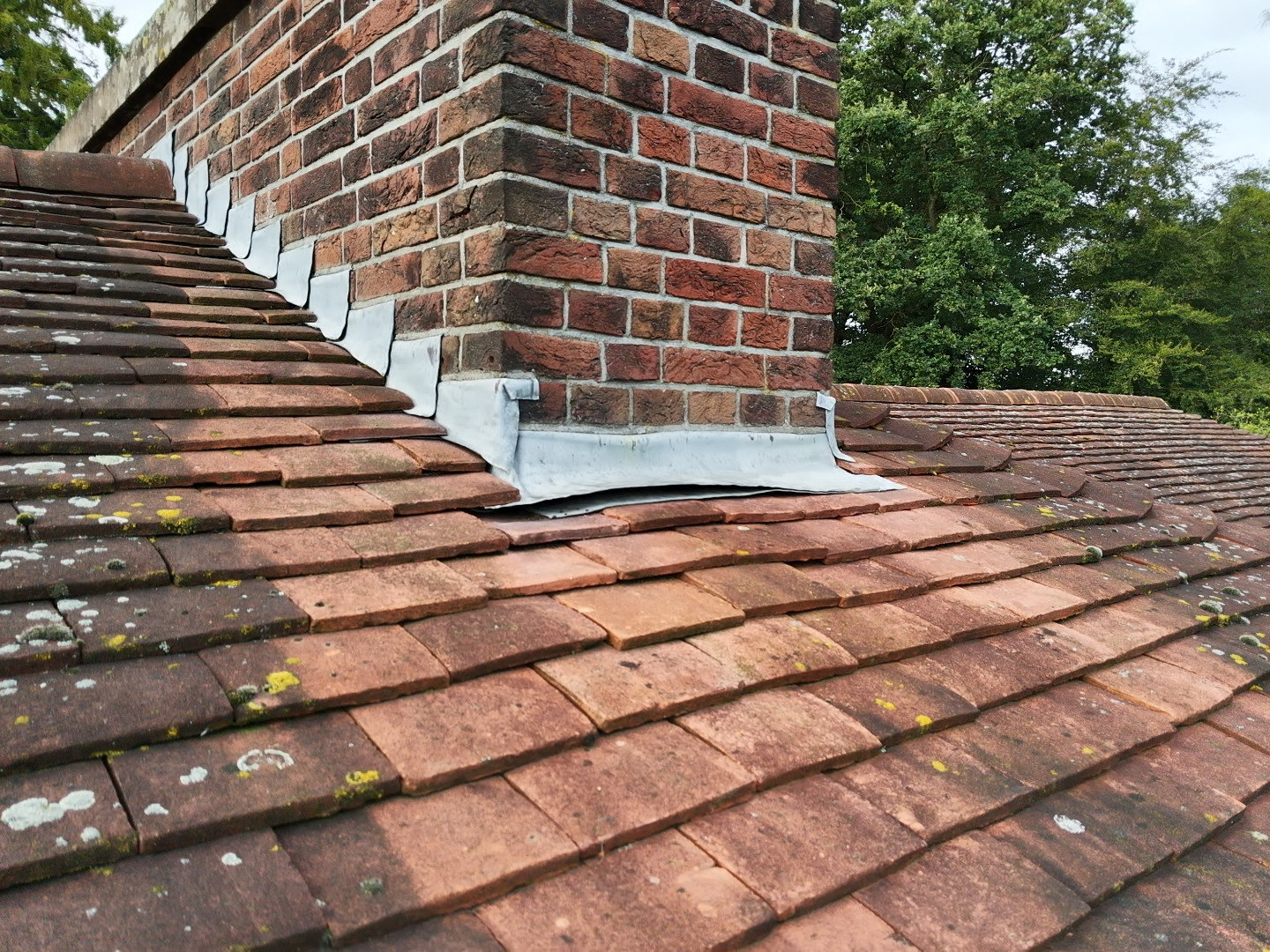
Roof junctions deserve particular attention because they connect different surfaces and materials. Chimney aprons, stepped flashings and valley heads can be difficult to see from the ground. Close photographs can make the next investigation more focused.
Start with the pattern of the reported leak
Record when the water appeared, which room was affected and what the weather was doing. Ask whether the issue occurs after prolonged rain, during a particular wind direction or only intermittently. Note previous repair attempts and whether they changed the symptoms.
Photograph the affected area with a date and a wider view that shows its location. Share the record with the investigating professional. Avoid presenting a suspected explanation as an established fact: “water appeared after overnight rain” is more useful than an unsupported diagnosis.
What to look for at a roof junction
Exterior photographs can help identify a raised edge, an unusual fold, a discontinuity or a detail obscured by debris. Ask the report to distinguish clearly between the shape seen in the image and the performance that still needs to be checked.
In Focal’s country estate example, a raised chimney apron edge and an open-looking ridge fold were flagged for closer inspection. The next step was to check overlaps, restraint, corner returns and the wall junction. The photographs did not establish an active water-entry path.
- Locate the concern on an overview as well as a close image.
- Record whether the detail is fully visible or partly concealed.
- Check whether earlier photographs show the same arrangement.
- Ask which physical checks are needed before choosing a repair.
Do not confuse weathering with a diagnosis
Discolouration, surface marks and growth can draw attention to a component without showing exactly what is happening within it. A photograph also cannot reliably tell you whether a concealed fixing is sound or whether moisture is present beneath a covering.
Historic England’s guidance on decay in older homes recommends understanding the cause of a problem and seeking appropriate advice. That principle is useful here: specify the investigation before selecting a treatment.
Reference: Historic England: understanding decay in an older home
Give the contractor a focused brief
Send the relevant evidence references, a location image and the history of the symptom. Ask the contractor to report what was confirmed, what remains uncertain and what repair is proposed. If access is needed, agree whether the visit is for diagnosis, repair or both.
For a complex or historic roof, involve someone familiar with the materials and details present. A generic instruction to seal everything visible is not a substitute for an appropriate repair specification. The report should support the specialist’s work rather than pretend to replace it.
Keep evidence after the repair
Request completion photographs showing the same location and retain the agreed scope. Record whether the contractor discovered anything different from the original visual assessment. This prevents an assumption in the first report from becoming an unquestioned fact in later records.
Continue to log the original symptom after work, including relevant weather events. A tidy-looking finish is useful evidence of appearance, but it is not the same as verifying performance. Agree any testing or follow-up with the professional responsible for the repair.
Published by Focal Inspections. These guides explain external visual inspection and maintenance planning; the appropriate investigation and repair depend on the building. Source links are included alongside the relevant guidance.
About Focal InspectionsPut the evidence to work.
Tell us about your property and the decisions you need to make. We’ll help define the inspection scope.